The Three-Field Meeting Memo: Decisions, Owners, Expiration Dates
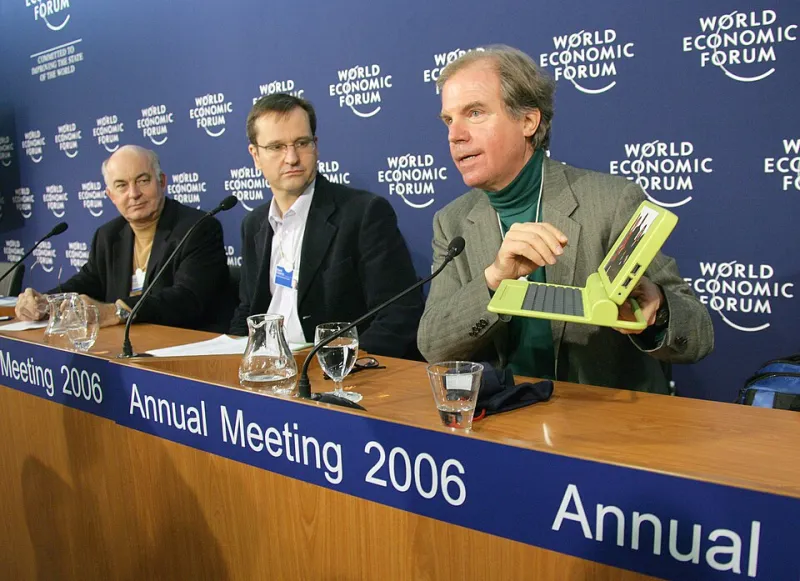
Photo: World Economic Forum from Cologny, Switzerland, CC BY-SA 2.0, via Wikimedia Commons
Somewhere in your company’s cloud, there is a transcript of a meeting you barely remember. It has speaker labels, timestamps, a tidy summary, and a searchable index. It is also almost certainly never going to be read again.
That is the strange bargain of modern meeting software. Capture has become nearly free. Zoom, Google Meet, Microsoft Teams, and a parade of AI note-takers will happily record the call, label the speakers, and produce a summary before you have finished your coffee. The result feels productive. But a searchable archive is not the same thing as a shared memory, and most teams are learning that the hard way.
At Mixthinks, we are less interested in tools that capture everything than in tools that help us think clearly. Meeting notes are a perfect test case. The problem is no longer how to remember what was said. The problem is how to keep the useful part from being buried under the rest.
The Archive Is Not Memory
AI note-takers solve an old problem—manual note-taking—and quietly create a new one: storage without recall. A transcript can tell you that someone said the launch date might slip. It cannot easily tell you whether the team actually decided to move the date, who agreed to handle the fallout, or when that decision should be revisited.
So the notes pile up. A weekly sync produces a summary. A project review produces another. A quick call about a customer issue produces a third. Each document is individually reasonable. Together, they become a graveyard of searchable but unloved text. When someone needs an answer, they do not search the archive. They ask a colleague in Slack. That is the tell.
This is not an argument against AI meeting tools. It is an argument against treating them as the final product. A recorder captures the conversation. A useful meeting record captures the commitment.
The Memo Should Be Smaller Than the Meeting
The fix is not a better summary template with more headings. It is a stricter one. After most meetings, the durable record should fit into three fields:
- Decision: What changed, or what was explicitly left unchanged?
- Owner: Who is accountable for the next step?
- Expiration: When should this decision be reviewed, revisited, or allowed to die?
That is it. Not a narrative. Not a transcript highlight reel. Not a list of every topic that came up. If the meeting did not produce a decision, the memo can say so. That is useful information too.
A decision entry should be concrete enough to survive without the meeting. Instead of “discussed onboarding email changes,” write “replace the three-email welcome sequence with one message before the next sprint.” Instead of “Maya will look into pricing,” write “Maya will bring two pricing options to the December growth review.” The owner should be a person, not a team, unless the team has a single accountable lead. The expiration date is the part most teams skip, and it is the part that keeps the memo honest.
The Expiration Date Is the Point
Decisions age. A choice that made sense in October may be wrong by January. But most meeting notes are written as if every decision is permanent. They sit in a folder, slowly becoming folklore. New team members find them, assume they still apply, and build on assumptions nobody has checked.
An expiration date fixes that. It does not mean the decision automatically reverses. It means someone will look at it again. A pricing call might expire at the next quarterly review. A vendor choice might expire after a 30-day trial. A process change might expire after two sprints. The date should match the natural shelf life of the decision, not the team’s optimism.
This is where AI can help without taking over. Let the note-taker draft the memo, then have a human prune it. The AI is good at finding candidate decisions in a transcript. It is not good at knowing which ones the team actually intends to stand behind. That requires a person in the room to say, “Yes, that is the decision, and I own it.”
Keep the Transcript on a Leash
Transcripts still have a place. They are useful for exact language, complex technical discussions, customer calls with legal implications, and the occasional dispute about what was promised. But they should be evidence, not memory. Treat them like raw footage: keep them for a defined period, make them searchable when needed, and do not confuse their existence with communication.
A practical rule: if a meeting produces no decision, no owner, and no review date, do not create a permanent memo for it. Let the transcript expire. If the conversation matters later, someone can retrieve it. If it does not, you have saved your team from another document nobody will read.
Measure Recall, Not Volume
Most teams measure meeting notes by volume: summaries created, transcripts stored, action items extracted. Those numbers mostly prove the software is working. They do not prove the team is better informed.
A better test is recall. Once a month, pick five recent decisions from your memos and ask the relevant people, without searching, who owns each one and when it is due for review. If they cannot answer, the memo failed. If they can, the system is doing its job.
A second metric is reopen rate. Count how often a decision gets revisited because the owner or review date was unclear. High reopen rates suggest your memos are too vague. A third is lookup success: when someone does search the archive, do they find the decision in under a minute? If not, the archive is not a memory system. It is a landfill with a search bar.
Finally, compare the number of transcripts saved with the number of decisions logged. If transcripts vastly outnumber decisions, you are probably hoarding conversation and starving commitment.
A Small Ritual Beats a Big Archive
The best meeting-memory system is not the one with the most advanced AI. It is the one your team will actually maintain. End every meeting with a two-minute memo review. Read the decision, the owner, and the expiration date aloud. Let the owner confirm. Then close the call.
That ritual is small, boring, and effective. It turns the meeting from a pile of searchable text into a set of commitments with names and dates attached. The transcript can stay in the background. The memo is what your team carries forward.